Repairing Water-Damaged Electronics
General approach
Some people seem to think that water is the kryptonite of electronic devices - that once something gets wet, you might as well throw it away. In my experience, repairing water-damaged electronics is often quite simple. Most of the time it comes down to thorough cleaning.
Substances like salt water, fizzy drinks, coffee, and detergent can be more troublesome, but the general repair approach is still the same.
If you get your hands on a device that was recently exposed to water (or anything water-like), I recommend the following steps:
- Disconnect all power sources if possible - unplug it and remove any batteries. Don't try to turn it on "to see if it still works" - running current through a wet circuit is what causes the lasting damage.
- If the device was soaked in anything other than clean water, rinse it with clean water. Tap water is fine.
- Open the device to expose the circuit boards and dry them with a paper towel.
- Clean the electronics thoroughly with isopropyl alcohol (or similar). A small brush or cotton swab works well for this. For small circuit boards, I like completely soaking them in alcohol for a while.
- Let the device dry completely, then test it. If it doesn't work, repeat step 4 and try again.
There are several reasons a device may stop working after coming into contact with fluids. Two common ones are:
- The residue may be slightly conductive, creating unintended connections between components.
- Oxidation on contacts, such as those on inter-board connectors, can prevent proper electrical contact.
Fortunately, the remedy is usually the same: thorough cleaning. Oxidation can often be removed by rubbing the contacts with a cotton swab soaked in isopropyl alcohol. If that isn't enough, some very light sanding can help restore good conductivity. If you have it on hand, contact cleaner spray is also a good way to remove oxidation.
Examples
Bathroom scale
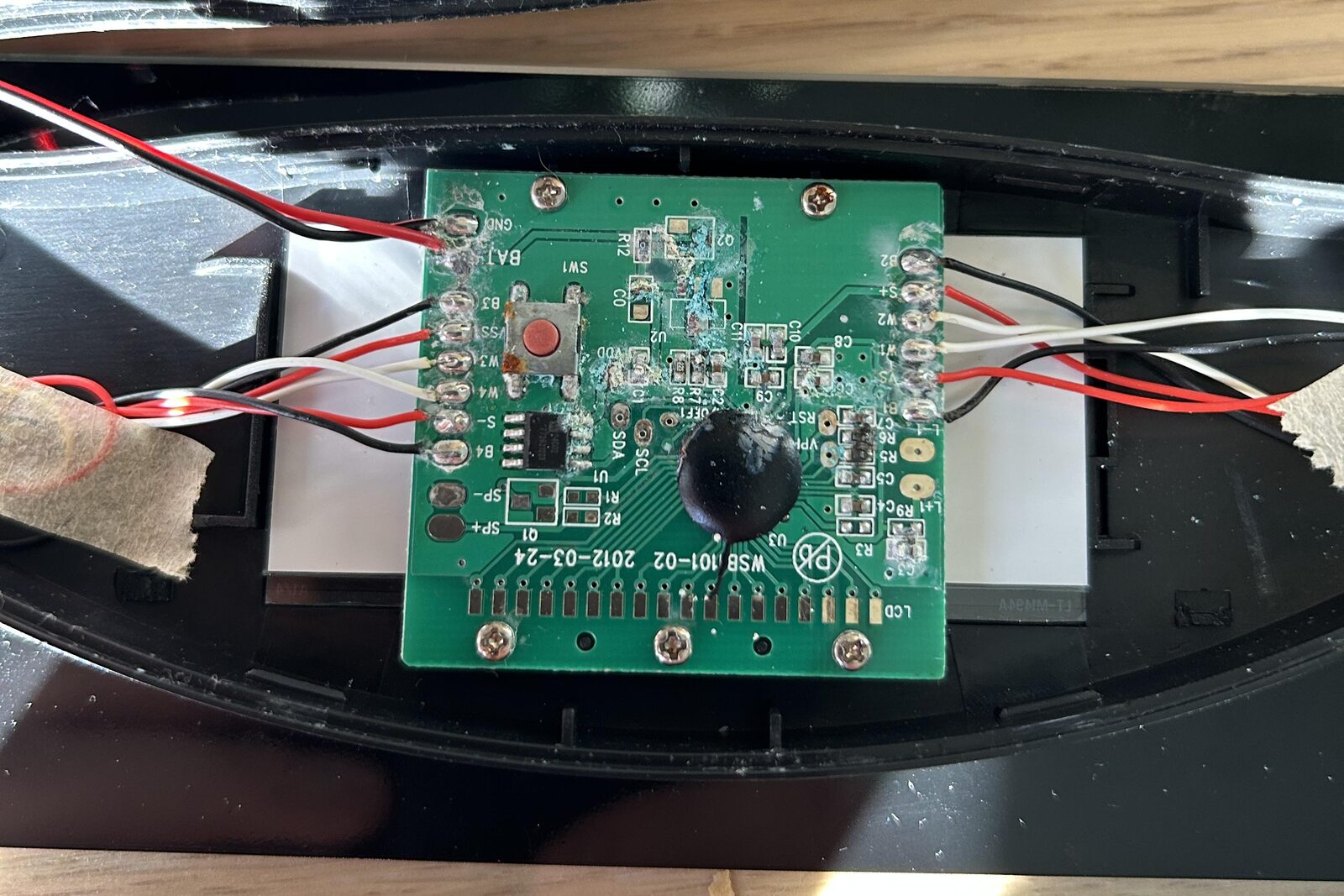
At one point my bathroom flooded, and the bathroom scale took a hit. The picture below shows the main circuit board after the dirty water had dried. You can see residue and oxidation across much of the board. After a good cleaning with isopropyl alcohol, the scale worked perfectly again.
Car key
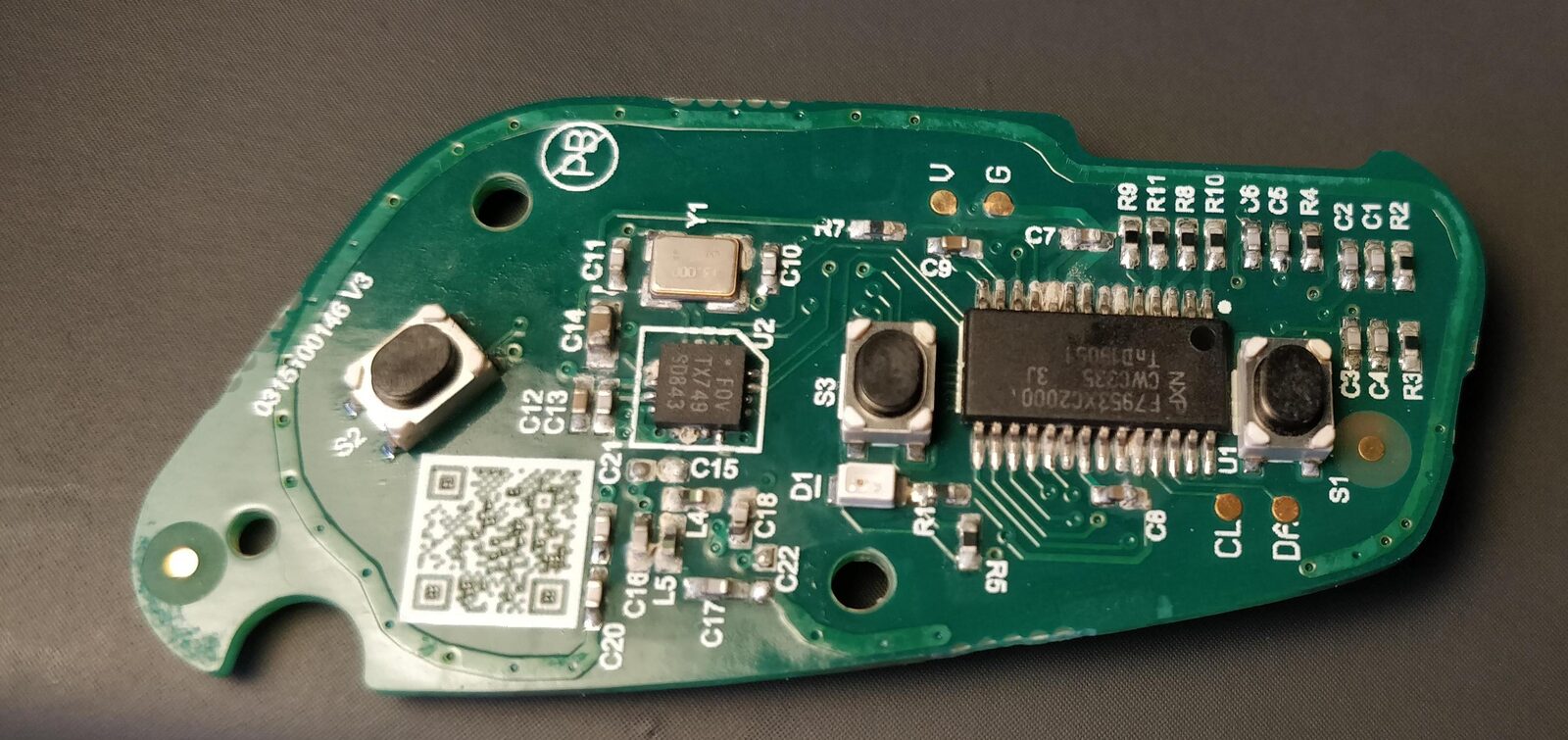
A family member forgot to empty their pockets before running the laundry, so their car key got the full 60° wash cycle - detergent and fabric softener included. When I received the key it had already dried, but after a proper rinse with isopropyl alcohol it worked fine again. After the first rinse the power consumption was still unusually high, but after a second, more thorough cleaning, it was as good as new.
The buttons here are a good example of components that can be troublesome after fluid damage. There are mechanical contacts on the inside, and cleaning on the outside of the buttons is often not enough. In these cases I find that leaving the device soaked in alcohol helps displace whatever got inside the buttons. Again, here contact cleaner spray can be really helpful to remove the oxidation.
Power drill
While building a new pier, I managed to drop a DeWalt power drill into the sea. After retrieving it, I removed the battery and dunked the entire drill into a bucket of clean water for several hours to get the salt out. Afterwards I opened it up, cleaned all the electronics with isopropyl alcohol, and added a few drops of oil to the mechanical parts. The drill is still working fine today.